
Welcome to the Architectural Lighting Blog by Edison Lighting. Whether you are an architect, interior designer, or a homeowner looking for luxury, our blog provides the latest trends in lighting technology. In this Architectural Lighting Blog, we explore how the right illumination can transform any space into a masterpiece.
Architectural lighting isn’t just about visibility; it’s about highlighting the character of a building. In our Architectural Lighting Blog, we focus on three main layers:
Ambient Lighting: The base layer for general illumination.
Task Lighting: Focused light for specific activities.
Accent Lighting: Used to highlight art or architectural features.
At Edison Lighting, we believe that professional lighting design is the bridge between architecture and emotion. Stay tuned to our blog for weekly updates on LED innovations and sustainable lighting solutions.
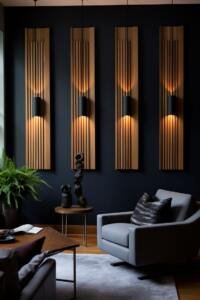
https://en.wikipedia.org/wiki/Light-emitting_diode“Our Architectural Lighting Blog is dedicated to providing high-quality insights into the world of professional illumination. We cover everything from technical LED specifications to the emotional impact of light in modern architecture. By following our blog, you will stay updated on the latest industry standards and innovative lighting solutions used by top architects globally.” LED SPECIFICATIONS
Welcome to our Architectural Lighting Blog, your premier resource for mastering the art of illumination. Architectural lighting is more than just installing bulbs; it’s a strategic design element that integrates light into the very fabric of your home. At Edison Lighting, we believe that the right light doesn’t just illuminate a room—it defines it.
To truly transform a space, you must understand the different fixtures available. In this Architectural Lighting Blog, we categorize them into three essential styles:
Recessed Lighting: These fixtures are installed directly into the ceiling, providing a clean, minimalist look. They are perfect for ambient lighting in modern kitchens or hallways, offering a seamless integration that doesn’t distract from the architecture.
Track Lighting: If you need flexibility, track lighting is the answer. It allows you to adjust individual lamps to highlight artwork or specific tasks. This is a staple for professional lighting technology applications where precision is key.
Pendant Lighting: These are the “jewelry” of a room. Hanging from the ceiling, pendant lights provide direct task lighting over dining tables or kitchen islands while serving as a bold design statement.
The psychology of light is a major focus of our Architectural Lighting Blog. Proper lighting design influences how we feel within a space. Warm light creates intimacy and comfort, making it ideal for bedrooms and living areas. Conversely, cool white light promotes focus and productivity, which is why it is preferred for home offices and functional spaces.
By layering your lighting—combining recessed units for general brightness with pendants for style—you create depth. This layered approach is the hallmark of luxury design. At Edison Lighting, we specialize in high-end LED solutions that are both energy-efficient and aesthetically superior.
As we move toward a greener future, the Architectural Lighting Blog is committed to exploring sustainable options. Modern LED technology has revolutionized the industry, offering thousands of hours of life with minimal energy consumption. When you choose architectural lighting from Edison Lighting, you aren’t just choosing style; you are choosing a sustainable future for your home.
Whether you are an architect planning a new project or a homeowner refreshing your space, our blog provides the technical details and creative inspiration you need to succeed.
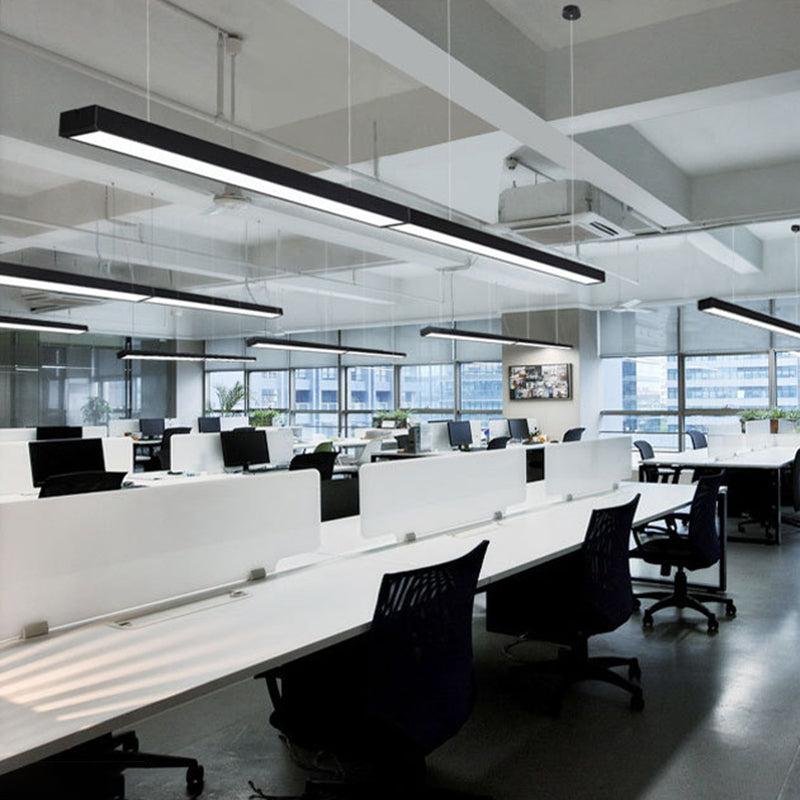
Learn the latest office lighting standards, recommended lux levels, colour temperature, glare control, and LED lighting solutions for modern offices. Discover how Edison Lighting designs energy-efficient workspaces.
Lighting is one of the most important elements in a modern office. A well-designed lighting system improves employee productivity, enhances visual comfort, reduces eye strain, and creates a professional working environment.
At Edison Lighting, we specialize in designing and manufacturing premium architectural LED lighting solutions for corporate offices, commercial buildings, IT parks, coworking spaces, and business facilities across India.
Whether you’re an architect, interior designer, builder, or facility manager, understanding office lighting standards helps you create comfortable and energy-efficient workspaces.
Poor lighting can result in:
A professionally designed lighting system improves:
Modern office lighting is typically designed around these key performance requirements:
| Parameter | Recommended Value |
|---|---|
| Illuminance (Lux) | 300–500 Lux (500 Lux for detailed desk work) |
| Colour Rendering Index (CRI) | 80+ (90+ for premium applications) |
| Colour Temperature | 4000K Neutral White |
| Unified Glare Rating (UGR) | Less than or equal to 19 |
| Uniformity | Minimum 0.6 |
These recommendations align with widely used office lighting guidance such as EN 12464-1 and IS 3646, helping create visually comfortable workspaces.
Proper lux levels ensure employees can work comfortably without excessive brightness or dark areas.
At Edison Lighting, we recommend combining multiple fixture types to create layered lighting.
Ideal for:
Benefits
Perfect for:
Benefits
Suitable for:
Benefits
Recommended for
These fixtures combine focused illumination with a sophisticated architectural appearance.
Ideal for
Warm lighting suitable for:
Recommended for:
Provides excellent visual comfort while maintaining employee alertness.
Generally used only for specialised industrial or inspection areas where very cool lighting is required.
One of the biggest mistakes in office lighting is excessive glare.
Professional office lighting should:
Good glare control helps reduce eye strain during long working hours.
Modern LED office lighting offers:
Combining LED fixtures with dimming controls, occupancy sensors, and daylight harvesting can further improve energy efficiency.
Edison Lighting partners with:
Our services include:
If you’re designing a new office, renovating an existing workspace, or planning a commercial project, Edison Lighting can help you create lighting systems that combine performance, efficiency, and aesthetics.
Our team supports architects, consultants, and builders with complete lighting solutions—from product selection and lux calculations to final installation guidance.
Looking for Architectural Lighting in Bangalore, Commercial Office Lighting, or LED Office Lighting Solutions?
Our experts are ready to help you design efficient, comfortable, and visually impressive workspaces.
Call us today to discuss your project and receive professional lighting guidance.
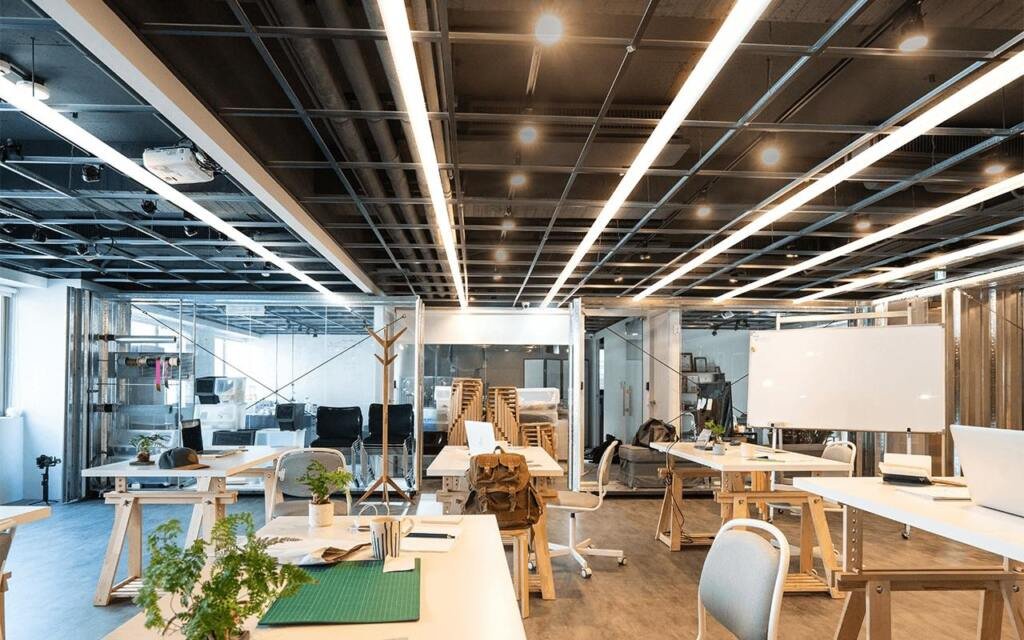
Designing a new office or renovating your workspace?
Our lighting experts can help you with:
✅ Lighting Design
✅ Lux Calculations
✅ Product Selection
✅ Energy-Efficient LED Lighting
✅ Commercial Office Lighting Solutions
✅ Architectural Lighting Consultation
📞 Call Us: +91 9731196786
📧 Email: sogi@edisonlighting.in
🌐 Website: https://edisonlighting.in/
Or click the Contact Us button below to discuss your project.
Discover how professional lighting design, custom LED fixtures, and strategic illumination transform modern residential and commercial spaces across India.
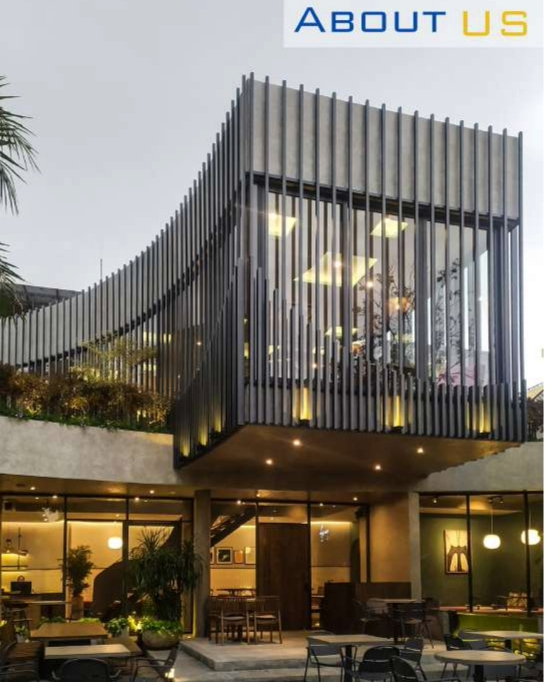
Lighting is no longer simply about making a space bright. Today, lighting plays an important role in architecture, interior design, productivity, comfort, branding, and the overall experience of a space.
From modern homes and luxury residences to corporate offices, retail stores, hotels, restaurants, hospitals, and large commercial developments, the right lighting design can completely transform an environment.
As the demand for energy-efficient and aesthetically appealing lighting continues to grow, architects, interior designers, electrical consultants, builders, and project owners are increasingly looking for reliable architectural lighting solutions in India.
This guide explains everything you need to know about architectural LED lighting, lighting design, commercial lighting, residential lighting, and custom lighting solutions.
Architectural lighting is the process of using carefully planned lighting fixtures and lighting techniques to enhance the architecture, interior, functionality, and atmosphere of a space.
Unlike basic illumination, architectural lighting considers several factors, including:
The purpose of the space
Architecture and interior design
Ceiling height
Room dimensions
Required lux levels
Light distribution
Beam angle
Colour temperature
Glare control
Energy efficiency
Visual comfort
Aesthetic requirements
A well-designed lighting system combines technical performance with visual appeal.
For example, a corporate office may require uniform and comfortable illumination for employees, while a luxury residence may require a combination of ambient, accent, and decorative lighting to create a premium atmosphere.
Good lighting can influence how people perceive and experience a space.
A professional lighting design can help:
Properly selected lighting reduces excessive glare, harsh shadows, and uncomfortable brightness.
Architectural lighting can highlight walls, ceilings, columns, textures, artwork, facades, and other important architectural elements.
In offices and commercial environments, appropriate lighting can create a more comfortable working environment.
Lighting can make a space feel warm, luxurious, modern, dramatic, welcoming, or energetic depending on the design approach.
Modern LED lighting solutions consume less energy and can provide long-lasting performance compared with traditional lighting technologies.
Retail stores, hospitality spaces, corporate offices, and commercial environments can use lighting as part of their overall brand experience.
Different spaces require different lighting approaches. A professional lighting manufacturer or lighting design team can recommend the right combination based on the project’s requirements.
LED downlights are widely used in residential, commercial, hospitality, retail, and office environments.
They can be used for:
General illumination
Accent lighting
Corridor lighting
Retail lighting
Hospitality lighting
Residential interiors
The right beam angle, lumen output, colour temperature, and cut-out size should be selected according to the application.
COB spotlights are commonly used where focused illumination is required.
They are suitable for:
Highlighting artwork
Retail displays
Showrooms
Galleries
Hospitality spaces
Feature walls
Residential interiors
Selecting the correct beam angle is important to achieve the desired lighting effect.
Linear LED lighting provides clean and continuous illumination and is widely used in contemporary architecture and interior design.
Linear lights can be used for:
Office lighting
Cove lighting
Ceiling lighting
Suspended lighting
Recessed applications
Retail spaces
Architectural details
Linear lighting is especially popular in modern commercial and corporate interiors.
Magnetic lighting systems offer flexibility and allow lighting fixtures to be repositioned according to changing requirements.
They are suitable for:
Modern residences
Retail stores
Showrooms
Galleries
Offices
Hospitality spaces
Different modules can be combined to create a flexible lighting system.
Suspended fixtures are commonly used in offices, reception areas, meeting rooms, restaurants, dining spaces, and commercial interiors.
They can provide both functional illumination and a strong visual design element.
Custom suspended lighting can also be developed according to the project’s architectural requirements.
Decorative lighting combines illumination with aesthetics.
Pendant lights, designer fixtures, ring lights, cane lights, jute lights, and customised decorative fixtures can be used to create a distinctive visual identity.
Decorative lighting is often used in:
Luxury residences
Hotels
Restaurants
Cafes
Reception areas
Lounges
Retail spaces
Wall-mounted lighting can be used to create depth, highlight architectural surfaces, and improve the visual character of interiors and exteriors.
Wall lighting is commonly used in:
Corridors
Hospitality projects
Residential interiors
Facades
Landscape areas
Feature walls
Every architectural project is different.
Sometimes standard lighting fixtures may not meet the project’s exact dimensions, design intent, or technical requirements. In such situations, custom lighting solutions can be developed.
Custom lighting may involve:
Special dimensions
Unique shapes
Custom finishes
Specific colour temperatures
Special mounting systems
Custom lumen requirements
Integrated lighting solutions
Working with an experienced lighting manufacturer can help architects and designers turn unique concepts into practical lighting installations.
Choosing a lighting fixture should not be based only on wattage or appearance.
Several technical factors need to be considered.
Lumens indicate the amount of light produced by a fixture.
Higher wattage does not always mean better lighting. The actual lumen output should be considered when planning a project.
Lux refers to the amount of illumination falling on a surface.
Different spaces require different lighting levels depending on their purpose and standards.
For example, an office, corridor, retail showroom, residence, and industrial space may all have different lighting requirements.
Beam angle determines how widely or narrowly the light is distributed.
Common beam angles include:
Narrow beam
Medium beam
Wide beam
A narrow beam may be suitable for accent lighting, while a wider beam can be used for general illumination.
Colour temperature affects the appearance and mood of a space.
Common options include:
Warm white
Neutral white
Cool white
The selection depends on the application, interior design, and desired ambience.
CRI indicates how accurately colours appear under a light source.
High-CRI lighting can be especially important in:
Retail
Art galleries
Hospitality
Showrooms
Residential interiors
Fashion stores
Glare can negatively affect visual comfort.
Professional lighting design should consider fixture positioning, optics, beam angle, shielding, and installation height to reduce unwanted glare.
Commercial spaces require carefully planned lighting to balance functionality, energy efficiency, comfort, and aesthetics.
Lighting solutions can be designed for:
Corporate offices
IT parks
Retail stores
Shopping centres
Hotels
Restaurants
Hospitals
Educational institutions
Showrooms
Commercial buildings
A professional lighting solution should consider the project’s architectural drawings, ceiling plans, furniture layout, activity levels, lux requirements, and design intent.
Modern homes increasingly use layered lighting rather than relying on a single central light source.
A residential lighting design may combine:
Provides overall illumination.
Provides focused light for activities such as reading, cooking, or working.
Highlights artwork, textures, furniture, or architectural elements.
Adds visual character and enhances the interior design.
Combining these lighting layers can create a comfortable and visually appealing home environment.
Architects and interior designers often need lighting solutions that complement their design concepts.
A lighting manufacturer and lighting design team can support projects by helping with:
Product selection
Lighting layouts
Lux calculations
Beam angle selection
Colour temperature selection
Fixture specifications
Custom lighting development
Technical consultation
Project coordination
Early collaboration between the architect, interior designer, electrical consultant, and lighting team can help achieve better results.
Selecting the right lighting partner is an important decision for any project.
A professional lighting manufacturer can provide more than just lighting fixtures.
The right partner can support you with:
Product selection
Technical specifications
Lighting calculations
Customisation
Project-specific solutions
Energy-efficient LED technology
Installation guidance
Project support
For large projects, working with an experienced lighting partner can help ensure that the lighting design and product selection meet both aesthetic and technical requirements.
At Edison Lighting, we understand that every space has a unique purpose and design language.
Our approach combines lighting technology, design, functionality, and energy efficiency to create lighting solutions for modern architectural and interior spaces.
We offer lighting solutions for a variety of applications, including:
Architectural lighting
Commercial lighting
Residential lighting
Office lighting
Decorative lighting
LED lighting solutions
Linear lighting
COB spotlights
Downlights
Magnetic lighting
Suspended lighting
Custom lighting solutions
Lighting control solutions
Our team works with architects, interior designers, electrical consultants, builders, developers, and project owners to understand project requirements and recommend suitable lighting solutions.
Whether you are designing a luxury residence, corporate office, retail showroom, hospitality project, or commercial development, the right lighting can enhance the architecture and create a better experience for the people using the space.
Architectural lighting is the strategic use of lighting to enhance the architecture, functionality, aesthetics, and atmosphere of a space.
LED refers to the lighting technology, while architectural lighting refers to how lighting is designed and integrated into a space. LED technology is widely used in architectural lighting because of its energy efficiency, flexibility, and long lifespan.
The right lighting depends on the room size, ceiling height, activity, required lux level, lumen output, beam angle, colour temperature, CRI, glare requirements, and overall design intent.
For larger or more complex projects, professional lighting design can help achieve the desired illumination levels, visual comfort, energy efficiency, and architectural effect.
Yes. Depending on the manufacturer and project requirements, lighting fixtures can be customised in terms of dimensions, shape, finish, colour temperature, lumen output, and mounting requirements.
You can contact the Edison Lighting team with your architectural drawings, floor plans, ceiling plans, project requirements, and design intent. Our team can help identify suitable lighting solutions for your project.
Lighting is an essential part of modern architecture and interior design. The right lighting solution can improve functionality, enhance aesthetics, create visual comfort, and transform the overall experience of a space.
From LED downlights and COB spotlights to linear lighting, magnetic systems, decorative fixtures, and custom lighting solutions, today’s lighting technology offers endless possibilities.
If you are an architect, interior designer, builder, electrical consultant, lighting designer, or project owner looking for professional architectural lighting solutions in India, working with an experienced lighting partner can help bring your design vision to life.
Edison Lighting provides architectural and LED lighting solutions designed to meet the functional, technical, and aesthetic requirements of modern projects.
Have a lighting requirement for your project? discuss your project and find the right lighting solution for your space.”
“Contact Edison Lighting”.
Discover how strategic illumination, technical LED specifications, and professional lighting design transform modern architectural spaces into extraordinary experiences.
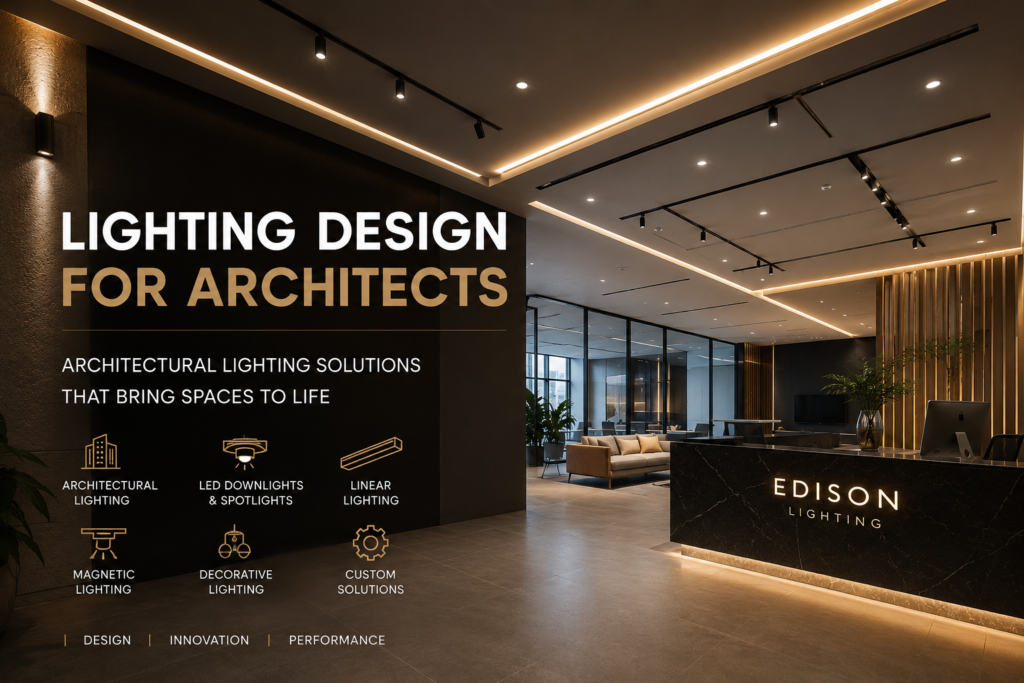
Lighting is one of the most important elements in architecture and interior design. A well-designed lighting system does more than illuminate a space—it enhances architectural features, creates visual comfort, highlights materials, improves functionality, and influences how people experience a building.
For architects, interior designers, electrical consultants, and project developers, selecting the right lighting solutions at the early stage of a project can make a significant difference to the final result.
From residential interiors and luxury homes to corporate offices, retail stores, hotels, restaurants, and large commercial projects, professional lighting design for architects requires a balance between aesthetics, technical performance, energy efficiency, and functionality.
In this guide, we explore the fundamentals of architectural lighting design and how the right lighting partner can help architects bring their design vision to life.
Lighting design for architects is the process of planning and integrating artificial lighting into an architectural environment to achieve both functional and aesthetic objectives.
A professional lighting design considers:
Architectural design
Interior design
Space planning
Ceiling height
Room dimensions
Activity within the space
Required illumination levels
Light distribution
Beam angles
Colour temperature
Colour rendering
Glare control
Energy efficiency
Lighting controls
Fixture aesthetics
The objective is to create a lighting environment that complements the architecture while providing the required level of illumination and visual comfort.
Lighting should ideally be considered during the early stages of architectural planning rather than being treated as an afterthought.
Architecture and lighting work together.
The same architectural space can look completely different depending on how it is illuminated. Carefully planned lighting can create depth, highlight textures, emphasize forms, and guide attention toward important elements.
Architectural lighting can highlight:
Feature walls
Columns
Ceilings
Textured surfaces
Staircases
Artwork
Facades
Landscape elements
The right combination of direct and indirect lighting can bring architectural details to life.
Poorly designed lighting can result in glare, harsh shadows, and uncomfortable brightness.
Professional lighting design considers fixture positioning, beam angles, optics, shielding, and light distribution to create a comfortable visual environment.
Lighting can influence how a space feels.
Warm lighting can create a comfortable and welcoming environment, while neutral or cooler lighting may be more suitable for certain commercial and professional environments.
Every space has different lighting requirements.
An office, retail showroom, restaurant, hotel, residence, and art gallery may all require different lighting strategies.
Modern LED lighting solutions can help reduce energy consumption while providing long-lasting performance.
Combining efficient LED fixtures with appropriate lighting controls can further improve the overall efficiency of a lighting system.
A successful architectural lighting design is based on several important principles.
Before selecting lighting fixtures, the designer should understand how the space will be used.
For example:
Offices require comfortable working illumination.
Retail stores require attractive product highlighting.
Restaurants require ambience and visual comfort.
Hotels require a combination of functional and decorative lighting.
Residences require flexible layered lighting.
Galleries require careful control of light levels and colour rendering.
The purpose of the space should guide the lighting strategy.
Lux is an important consideration when designing lighting for any architectural project.
Different areas may require different illumination levels depending on their function and applicable standards.
A professional lighting design should consider the required lux level, room dimensions, mounting height, surface reflectance, and fixture performance.
Simply choosing a light based on wattage is not enough.
Beam angle determines how widely light is distributed from a fixture.
Narrow beam angles can be useful for focused accent lighting, while wider beam angles may be suitable for general illumination.
The correct beam angle depends on:
Ceiling height
Mounting distance
Target surface
Desired lighting effect
Fixture spacing
For architects and interior designers, understanding beam angles is essential when creating focused lighting effects.
Colour temperature can significantly influence the appearance and atmosphere of a space.
Common options include:
Often used in:
Residences
Restaurants
Hotels
Hospitality spaces
Often suitable for:
Offices
Retail environments
Commercial interiors
Modern residential projects
May be used in selected:
Workspaces
Utility areas
Industrial applications
The final choice should be based on the architectural concept and the desired visual experience.
Colour Rendering Index, or CRI, indicates how accurately colours appear under a light source.
High-CRI lighting is particularly important for spaces where colour accuracy matters, such as:
Retail stores
Art galleries
Fashion stores
Showrooms
Hospitality interiors
Luxury residences
Selecting the appropriate CRI can help materials, finishes, fabrics, artwork, and products appear more naturally under artificial lighting.
A successful project often combines several types of lighting rather than relying on one fixture.
Ambient lighting provides general illumination throughout a space.
Typical solutions include:
LED downlights
Panel lights
Linear lights
Recessed fixtures
Suspended lighting
Task lighting provides focused illumination for specific activities.
Examples include:
Work desks
Kitchen counters
Reading areas
Workstations
Retail counters
Accent lighting is used to draw attention to specific architectural or interior elements.
It can highlight:
Artwork
Sculptures
Feature walls
Display units
Textures
Products
COB spotlights and adjustable spotlights are commonly used for accent applications.
Decorative lighting combines functional illumination with visual design.
Examples include:
Pendant lights
Designer lights
Ring lights
Decorative suspended fixtures
Cane lights
Jute lights
Custom lighting fixtures
These fixtures can become an important part of the interior design itself.
Linear LED lighting is widely used in contemporary architecture and interior design.
It can be integrated into:
False ceilings
Cove lighting
Recessed channels
Suspended systems
Wall details
Furniture
Architectural features
Linear lighting provides a clean and modern appearance and can be customised for different project requirements.
Magnetic lighting systems provide flexibility by allowing different lighting modules to be integrated into a single track system.
They are increasingly used in:
Modern homes
Retail stores
Showrooms
Offices
Galleries
Hospitality projects
Magnetic lighting can provide flexibility when the lighting requirements of a space may change over time.
Commercial projects require careful coordination between architecture, interiors, electrical systems, and lighting.
Professional lighting solutions may be required for:
Corporate offices
IT parks
Retail stores
Shopping centres
Hotels
Restaurants
Hospitals
Educational institutions
Showrooms
Commercial buildings
A commercial lighting design should consider employee comfort, customer experience, energy efficiency, maintenance, aesthetics, and project requirements.
For larger projects, architects and consultants may work with a professional lighting manufacturer or lighting design team to develop project-specific solutions.
Residential lighting design is increasingly moving toward layered lighting.
A modern residence may combine:
Ambient lighting
Task lighting
Accent lighting
Decorative lighting
Cove lighting
Wall lighting
For example, a living room may use recessed downlights for general illumination, linear lighting for architectural details, and decorative pendant lighting as a visual centrepiece.
The combination of different lighting layers allows homeowners to create different moods and experiences within the same space.
Choosing the right lighting manufacturer or lighting solutions provider is an important part of a successful project.
Architects should consider:
Lighting fixtures should provide reliable performance and consistent light output.
A good lighting partner should be able to provide technical information and project support.
Some architectural projects require custom dimensions, finishes, shapes, or mounting solutions.
For larger projects, lighting calculations can help determine fixture quantity, placement, and expected illumination levels.
Lighting suppliers should be able to coordinate with architects, interior designers, electrical consultants, and contractors.
A wide product portfolio allows designers to select suitable solutions for different applications.
A successful lighting project usually involves several stages.
Study the architectural drawings, floor plans, ceiling plans, and design intent.
Determine the purpose of each space and the required illumination.
Decide where ambient, task, accent, and decorative lighting will be used.
Choose suitable fixtures based on lumen output, wattage, beam angle, colour temperature, CRI, dimensions, and installation requirements.
Plan the fixture positions and spacing according to the design requirements.
Review the expected illumination levels and make adjustments where required.
Coordinate lighting requirements with architects, interior designers, electrical consultants, and contractors.
Ensure that the selected fixtures are correctly installed, aimed, and commissioned.
At Edison Lighting, we understand that lighting is an important part of architectural design.
Our approach combines lighting technology, aesthetics, functionality, and energy efficiency to create solutions that complement modern architectural environments.
We work with architects, interior designers, electrical consultants, builders, developers, and project owners to understand project requirements and recommend suitable lighting solutions.
Our lighting solutions can be used across:
Residential projects
Corporate offices
Commercial buildings
Retail stores
Hospitality projects
Showrooms
Restaurants
Custom architectural applications
Our product range includes solutions such as:
LED Downlights
COB Spotlights
Linear Lighting
Magnetic Lighting
Track Lighting
Suspended Lighting
Decorative Lighting
Wall Lighting
Custom Lighting Solutions
From the initial concept to product selection and project coordination, the right lighting partner can help architects achieve the desired visual and technical outcome.
Great architecture deserves great lighting.
The right lighting design for architects can transform an ordinary space into an environment that is functional, comfortable, visually engaging, and memorable.
By carefully considering lux levels, beam angles, colour temperature, CRI, glare control, energy efficiency, and fixture design, architects and lighting professionals can create lighting solutions that complement the architecture and enhance the experience of the people who use the space.
Whether it is a luxury residence, corporate office, retail showroom, hotel, restaurant, or large commercial project, professional architectural lighting design can make a significant difference.
At Edison Lighting, we work with architects, interior designers, consultants, builders, and project owners to provide architectural and LED lighting solutions for modern projects.
Planning a new architectural or interior project?
Contact Edison Lighting to discuss your lighting requirements and explore the right lighting solution for your project.
We craft tailor-made, high-performance LED lighting solutions designed to elevate commercial, residential, and architectural projects across Bangalore. From unique profiles to custom finishes, bring your design vision to life with precision engineering.
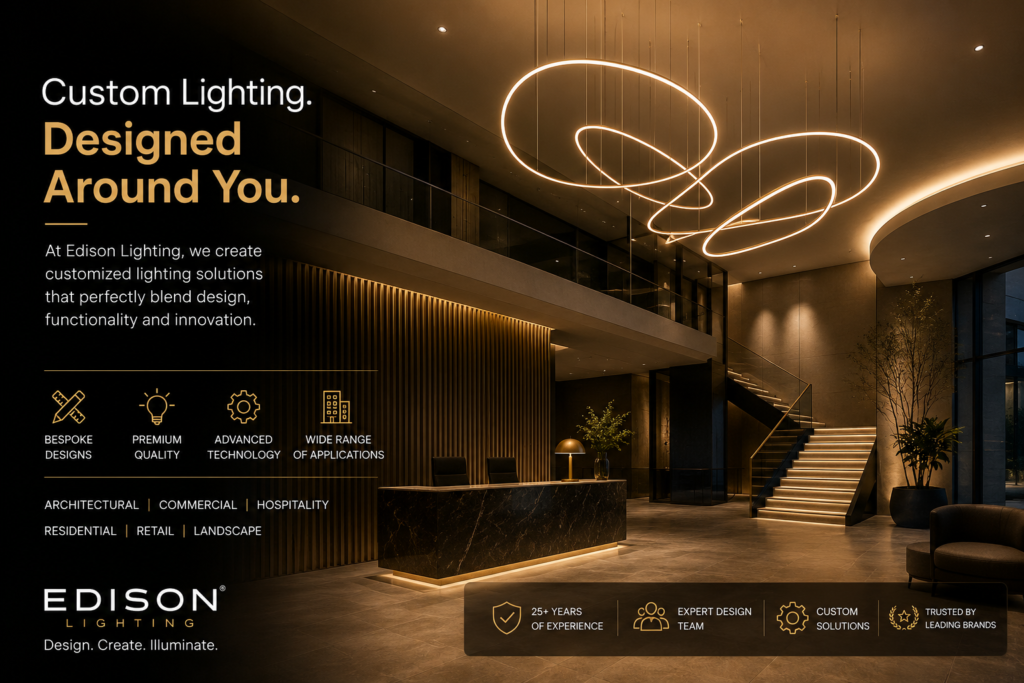
Lighting is no longer just about illuminating a room. Today, lighting plays an important role in defining the character, atmosphere, functionality, and visual identity of a space. From luxury residences and modern offices to hotels, restaurants, retail stores, and architectural projects, the right lighting can completely transform an environment.
If you are searching for customized lighting manufacturers in Bangalore, choosing the right lighting partner is essential. A professional custom lighting manufacturer can help turn your design concept into a practical lighting solution that is visually appealing, energy-efficient, and suitable for the specific requirements of your project.
Edison Lighting provides customized lighting solutions for architects, interior designers, consultants, builders, businesses, and homeowners looking for lighting that is designed around their project requirements.
Customized lighting refers to lighting products and solutions developed or modified according to the specific requirements of a project.
Unlike standard, ready-made lighting fixtures, customized lighting allows designers and clients to consider factors such as:
This makes custom lighting especially valuable for projects where standard fixtures cannot achieve the desired design or lighting performance.
Every architectural and interior project is different. A luxury residence may require warm decorative lighting, while a corporate office may need comfortable and uniform illumination. A retail showroom may require focused accent lighting, whereas a hospitality project may need a combination of ambient, decorative, and architectural lighting.
Customized lighting allows you to create solutions based on the specific needs of the space.
Custom lighting gives architects and interior designers greater freedom to create distinctive lighting features. Lighting fixtures can be designed to complement the architecture, furniture, ceiling, and overall interior concept.
Customized fixtures can be developed to work seamlessly with architectural elements. This can include linear lighting, suspended fixtures, recessed lighting, decorative installations, and other specialized solutions.
Custom lighting is not only about appearance. The fixture can also be developed with the required lumen output, beam angle, colour temperature, and light distribution to achieve the desired lighting effect.
Large architectural spaces may require lighting fixtures that are not available in standard sizes. Customized manufacturing makes it possible to develop lighting solutions according to specific dimensions.
For hotels, restaurants, retail stores, corporate offices, and commercial spaces, customized lighting can become part of the brand experience and visual identity.
Bangalore is one of India’s fastest-growing cities for architecture, interior design, technology, commercial development, hospitality, and luxury residential projects.
With the increasing demand for modern interiors and innovative architecture, there is a growing need for custom lighting manufacturers in Bangalore who can work closely with architects, interior designers, lighting consultants, and project teams.
At Edison Lighting, customized lighting can be developed with the project’s design intent and technical requirements in mind.
From the initial concept to the final lighting solution, the goal is to create lighting that combines design, functionality, performance, and efficiency.
Depending on the requirements of a project, customized lighting solutions can include:
LED technology offers excellent flexibility for modern lighting applications. Custom LED lighting can be designed for different applications, including architectural, commercial, residential, hospitality, and retail spaces.
Architectural lighting focuses on enhancing the structure and design of a space. Customized architectural lighting can be used to highlight walls, ceilings, façades, corridors, architectural details, and other design elements.
Linear lighting is widely used in contemporary architecture and interior design. Customized linear lighting solutions can be designed for specific lengths, shapes, profiles, and installation requirements.
Decorative lighting can become a major visual element within an interior. Custom decorative fixtures can be developed to complement the theme and character of a space.
Customized pendant lights are ideal for dining areas, reception spaces, hospitality projects, restaurants, offices, and luxury residences. The design, dimensions, finish, and lighting effect can be considered according to the project.
Modern ceiling designs often require lighting that integrates seamlessly with the architecture. Custom ceiling lighting can help create clean, sophisticated, and visually comfortable environments.
For projects requiring something truly distinctive, bespoke lighting fixtures can be developed around the architect’s or designer’s concept.
A successful customized lighting project requires collaboration between the client, designer, lighting consultant, and manufacturer.
The first step is to understand the project requirements, including the space, design concept, application, installation conditions, and lighting objectives.
The lighting concept is reviewed to understand the required form, dimensions, materials, finishes, and lighting performance.
Technical factors such as lumen output, wattage, colour temperature, beam angle, driver requirements, dimming, and installation method are evaluated.
For suitable projects, samples or prototypes can help evaluate the design, finish, light quality, and overall appearance before final production.
Once the design and technical specifications are finalized, the customized lighting fixture can move into the manufacturing stage.
The final stage involves coordinating the lighting solution with the project requirements and installation conditions.
Customized lighting can be used across a wide range of projects.
Luxury homes, villas, apartments, and premium residences often require lighting that combines comfort, functionality, and aesthetics.
Custom lighting can be used for:
Modern offices require lighting that supports productivity while maintaining a comfortable and professional environment.
Customized lighting solutions can be integrated into:
Hotels, restaurants, cafés, resorts, and hospitality spaces rely heavily on lighting to create a memorable experience.
Custom decorative and architectural lighting can help create the desired atmosphere while supporting the overall interior design.
Lighting has a significant impact on how products and merchandise are presented. Customized retail lighting can be designed to create focused illumination, highlight displays, and enhance the customer experience.
Architectural lighting can be customized to enhance the visual appearance of buildings and interiors. The right combination of direct and indirect lighting can highlight architectural elements and create depth.
When selecting a customized lighting manufacturer in Bangalore, it is important to work with a company that understands both design and technical lighting requirements.
Edison Lighting works with clients and project professionals looking for innovative and customized lighting solutions for modern spaces.
Our approach focuses on understanding the project requirements and developing lighting solutions that align with the intended design and application.
Whether you are an architect, interior designer, lighting consultant, builder, electrical consultant, or project owner, the right lighting partner can help you achieve better results.
Before selecting a custom lighting manufacturer, consider the following:
Look for a manufacturer with experience in different types of lighting applications and project requirements.
Lighting fixtures should be manufactured using reliable materials and components to ensure long-term performance.
A good lighting manufacturer should understand important parameters such as lumen output, wattage, colour temperature, beam angle, CRI, driver selection, and light distribution.
Check whether the manufacturer can modify or develop lighting fixtures according to your required size, design, finish, and application.
A professional lighting partner should be able to coordinate with architects, designers, consultants, and project teams throughout the process.
The ability to combine creative design with technical manufacturing is an important advantage when developing customized lighting solutions.
If you are searching for customized lighting manufacturers in Bangalore for your next residential, commercial, hospitality, retail, or architectural project, Edison Lighting can help you explore suitable lighting solutions based on your project requirements.
From custom LED lighting and architectural lighting to decorative fixtures and bespoke lighting solutions, the right approach can transform an ordinary space into a visually striking environment.
Have a lighting concept or project requirement?
Contact Edison Lighting to discuss your customized lighting requirements with our team.
Edison Lighting
Bangalore Office: HRBR Layout, Kalyan Nagar, Bengaluru, Karnataka
Website: Edison Lighting
The best customized lighting manufacturer depends on your project’s requirements, including design, size, technical specifications, materials, budget, and application. Look for a manufacturer with customization capabilities, technical expertise, quality products, and project experience.
Yes. Depending on the manufacturer’s capabilities, custom fixtures can be developed according to specific dimensions, shapes, finishes, mounting requirements, and lighting specifications.
Customized lighting can include custom LED fixtures, linear lights, pendant lights, decorative fixtures, architectural lighting, ceiling lighting, and specialized lighting installations.
Yes. Architects and interior designers often work with lighting manufacturers to develop fixtures that complement their design concepts and project requirements.
The cost depends on the design complexity, materials, size, quantity, components, and manufacturing requirements. While custom fixtures may have a higher initial cost than standard products, they can provide a unique solution specifically suited to the project.
A manufacturer may require project drawings, dimensions, ceiling details, application information, desired light levels, colour temperature, beam angle, mounting details, design references, and other technical specifications.
Customized lighting can be used in homes, villas, offices, hotels, restaurants, retail stores, showrooms, commercial buildings, public spaces, and architectural projects.
The right lighting can completely transform the way a space looks and feels. With customized lighting, architects, interior designers, businesses, and homeowners have greater freedom to create lighting solutions that are both visually distinctive and technically effective.
If you are looking for customized lighting manufacturers in Bangalore, consider a lighting partner who can understand your vision, support your technical requirements, and deliver solutions that complement your project.
Edison Lighting — Creating Lighting Solutions Designed Around Your Vision.
Discover professional commercial lighting solutions for offices, retail, hotels, restaurants and workspaces. Edison Lighting offers architectural LED lighting, custom fixtures, lighting design and smart controls in Bangalore, Hyderabad and across India.
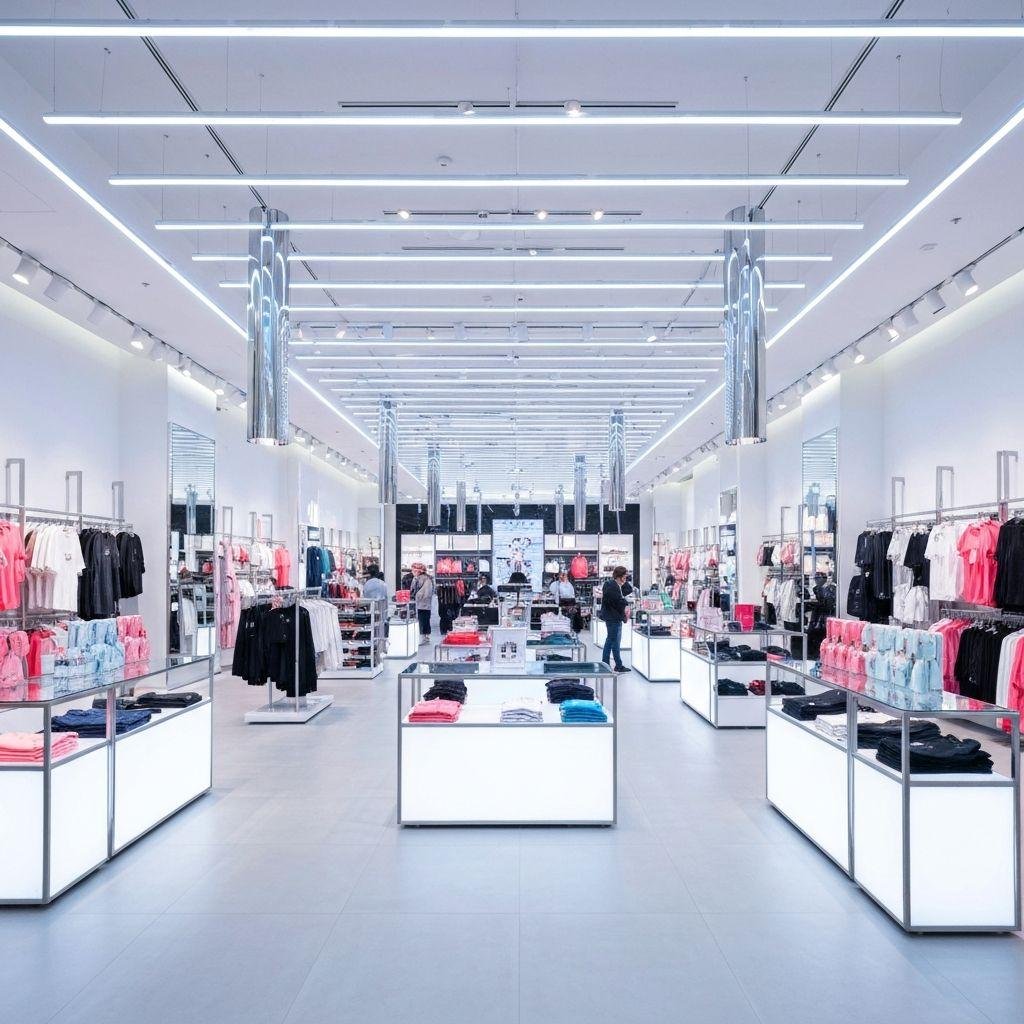
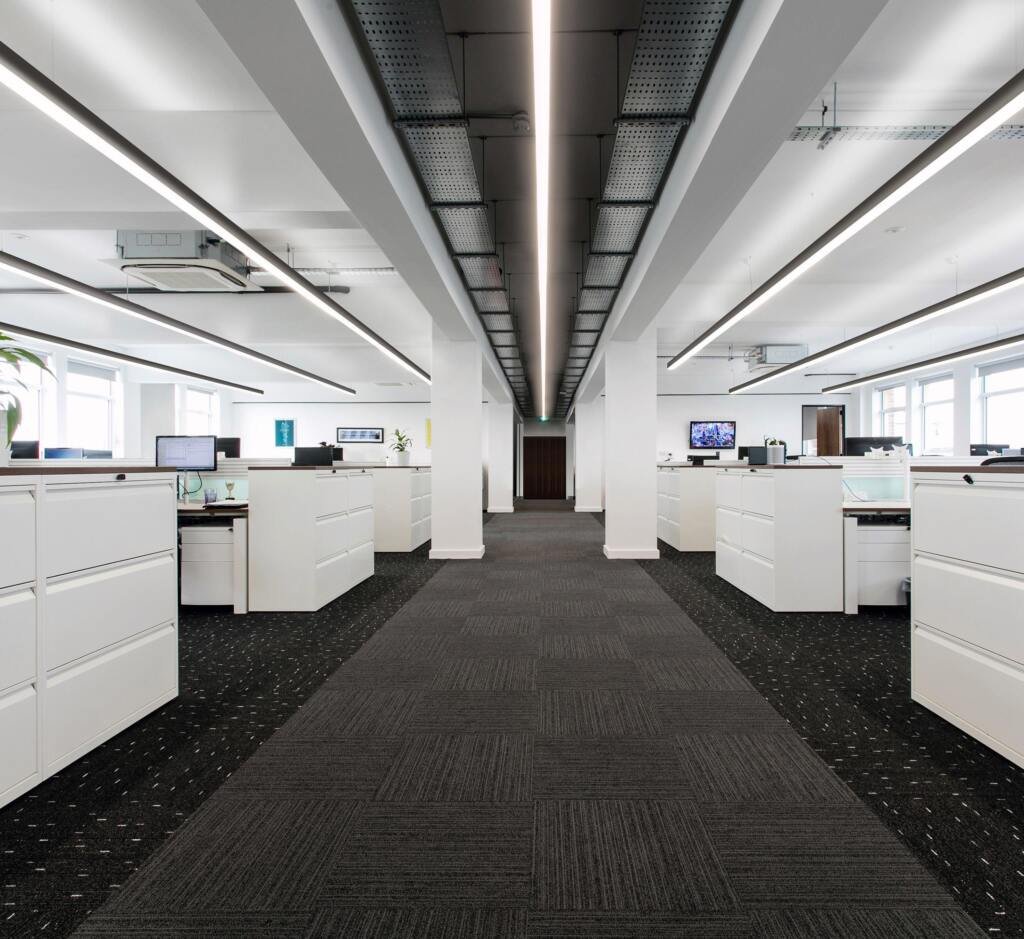
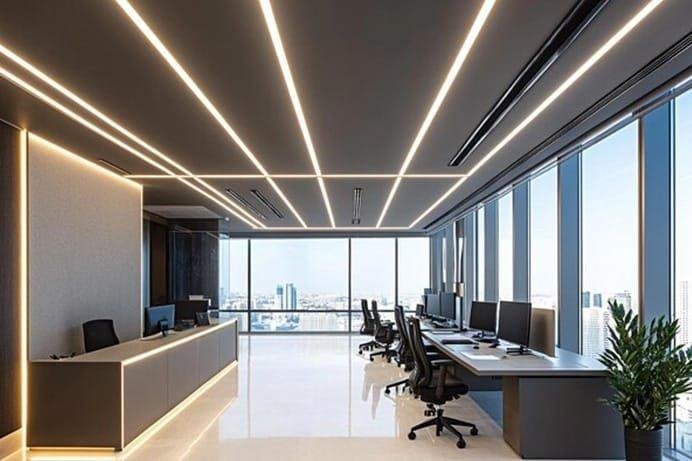
Lighting in a commercial space should never be treated as an afterthought.
It influences how people work, how products are perceived, how architecture is experienced and how a brand feels the moment someone enters the space.
For offices, retail stores, hotels, restaurants, corporate campuses and other commercial interiors, a successful lighting scheme must balance several things at once: visual comfort, architectural intent, energy efficiency, reliability and long-term operating cost.
At Edison Lighting, we approach commercial lighting as a complete design and engineering exercise rather than simply selecting fixtures from a catalogue.
From architectural luminaires and customized linear lighting to decorative fixtures, lighting calculations and smart lighting controls, every element should have a reason for being there.
Commercial lighting refers to lighting systems designed specifically for professional and public environments such as:
Corporate offices
Retail stores and showrooms
Hotels and resorts
Restaurants and cafés
Hospitals and healthcare spaces
Educational institutions
Commercial buildings
Reception areas and lobbies
Warehouses and industrial facilities
Outdoor commercial environments
Unlike residential lighting, commercial lighting usually has to perform for longer operating hours and meet more demanding requirements for illumination, durability, glare control, energy consumption and maintenance.
But good commercial lighting goes further.
It should support the architecture and purpose of the space.
A conference room needs a completely different lighting strategy from a luxury boutique.
A hotel lobby should feel different from an office workstation.
A retail display requires different colour rendering and beam control from a corridor.
That is why professional commercial lighting begins with the space — not the fixture.
Before people consciously notice the furniture, materials or finishes in a commercial interior, they experience the light.
Well-planned lighting can make architecture feel more considered, highlight textures and materials, create visual hierarchy and guide people naturally through a space.
Poor lighting can do the opposite.
Even an expensive interior can feel flat when everything is illuminated at the same intensity.
Professional lighting therefore works in layers.
Provides the general illumination required to comfortably use the space.
Provides focused light where specific activities take place.
Highlights architecture, artwork, merchandise and design features.
Adds character and helps establish the identity of the space.
The best commercial interiors rarely depend on only one of these layers.
Commercial spaces often operate their lighting systems for many hours every day.
That means fixture efficiency matters.
Modern LED luminaires can provide high light output while consuming substantially less electricity than many older lighting technologies.
But energy efficiency should not be judged by wattage alone.
A professional specification also considers:
Lumens.
Luminaire efficacy.
Optical efficiency.
Beam distribution.
Controls.
Daylight availability.
Operating hours.
The objective is not simply to install fewer watts.
It is to deliver the required light where it is actually needed.
That is where proper lighting calculations become important.
Modern offices need more than bright ceilings.
They require balanced illumination that supports concentration while keeping the environment visually comfortable.
A typical office may include:
Workstations
Meeting rooms
Collaboration zones
Cabins
Reception areas
Breakout spaces
Cafeterias
Corridors
Boardrooms
Each area should be treated independently.
Workstations may require controlled, uniform illumination, while a reception area can use a combination of architectural and decorative lighting to create a strong first impression.
Linear lighting is particularly effective in contemporary workplaces because it can integrate directly with the architecture.
At Edison Lighting, customized linear profiles can be developed for straight runs, suspended arrangements and project-specific geometric forms.
The result is lighting that becomes part of the architecture rather than something added to it afterward.
Retail lighting has a different objective.
The customer should notice the merchandise before noticing the fixture illuminating it.
That requires careful control of:
Beam angle
Colour rendering
Contrast
Colour temperature
Glare
Fixture placement
Accent intensity
Track lights and adjustable spotlights allow displays to change without redesigning the entire ceiling.
High-quality light can reveal texture, colour and material more accurately — particularly important for fashion, jewellery, furniture and premium products.
A successful retail lighting scheme also creates hierarchy.
Feature products receive more visual emphasis.
Circulation areas remain comfortable.
Displays stand out.
And the store feels intentionally designed rather than uniformly illuminated.
In hotels, restaurants and cafés, lighting becomes part of the experience.
Guests should not feel as though they are sitting under a generic commercial lighting system.
The lighting should work with the interior.
Warm decorative pendants can create intimacy above dining tables.
Architectural downlights can quietly provide functional illumination.
Wall lighting can bring depth to corridors and lounges.
Hidden linear lighting can emphasize joinery, ceilings and architectural details.
And customized decorative fixtures can become visual landmarks within the space.
For hospitality projects, Edison Lighting can combine architectural lighting with decorative and customized fixtures, allowing both sides of the lighting design to work together.
Architectural lighting is most successful when the fixture almost disappears and the effect of the light becomes the focus.
Typical architectural lighting solutions include:
Recessed downlights
COB lights
Track lighting
Linear profiles
Continuous LED systems
Wall washers
Concealed strip lighting
Surface and suspended luminaires
Cove lighting
Customized architectural fixtures
The correct product depends on far more than appearance.
Important technical considerations include:
Warm light creates a softer, more relaxed atmosphere, while neutral and cooler temperatures can suit task-oriented environments.
Colour Rendering Index indicates how accurately a light source reveals colours.
For environments such as retail, hospitality and premium interiors, colour quality can be particularly important.
Narrow beams create focused accents.
Wider beams provide broader illumination.
Using the wrong beam angle can produce dark areas, excessive brightness or unwanted glare.
A fixture can technically deliver enough light and still be uncomfortable.
Good optical design therefore matters just as much as lumen output.
Some interiors cannot be solved using standard products.
An architect may need:
A continuous linear light in a specific length
A curved profile
A geometric suspended feature
A custom decorative pendant
A special finish
A fixture built around an architectural detail
A large installation for an atrium or reception area
This is where working directly with a lighting manufacturer becomes valuable.
Rather than forcing the architecture to accommodate a standard fixture, the fixture can be developed around the architecture.
Edison Lighting works on customized architectural and decorative lighting for project-specific requirements, helping designers translate a concept into something that can actually be manufactured and installed.
Commercial lighting is increasingly becoming intelligent.
Lighting can now respond to:
Occupancy
Daylight
Time schedules
Scenes
Zones
User requirements
Meeting rooms can have presentation and discussion scenes.
Restaurants can transition from daytime to evening ambience.
Office lighting can respond to occupancy.
Large commercial spaces can group and manage multiple lighting zones from a centralized system.
Smart controls can therefore improve both the experience of the space and the way energy is managed.
One of the biggest mistakes in commercial projects is deciding lighting purely through a fixture quotation.
By that stage, important decisions may already have been missed.
Professional lighting planning should consider:
Architectural drawings
Furniture layouts
Ceiling design
Activities within each space
Required illumination
Fixture positioning
Beam angles
Colour temperature
Controls
Decorative lighting
Emergency and exterior requirements where applicable
Once these parameters are established, the product specification becomes much more accurate.
This also makes commercial comparisons fairer.
Two luminaires with the same wattage are not necessarily equivalent.
Their optical performance, driver, colour rendering, glare control, construction and expected performance may be completely different.
A LUX calculation helps predict how much illumination a proposed lighting scheme will provide across a space.
Rather than guessing the number of fixtures required, lighting calculations allow designers and project teams to evaluate the proposed layout before installation.
This can help answer questions such as:
Are the workstations receiving sufficient light?
Are there dark areas?
Is the lighting unnecessarily excessive?
Are fixtures positioned efficiently?
For commercial projects involving many fixtures, this step can prevent expensive corrections later.
Edison Lighting supports project-based lighting design and LUX planning so fixture selection can be based on the actual space rather than assumptions.
When evaluating a commercial lighting supplier or manufacturer, price should be one consideration — not the only consideration.
Ask:
The strongest project outcomes usually happen when the lighting company becomes a technical partner to the design team rather than simply supplying fixtures at the end.
Edison Lighting provides commercial and architectural lighting solutions for projects in Bangalore, Hyderabad and across India.
Our work covers lighting for:
Corporate offices
Retail
Hospitality
Restaurants
Healthcare
Commercial developments
Residential developments
Landscape and outdoor areas
Customized architectural applications
Our product and solution portfolio includes:
Architectural LED luminaires
Customized linear lighting
Track lighting
Downlights and COB lighting
Glass pendant lighting
Decorative hanging lights
Wall lights
Fabric and acoustic lighting
Cane lighting
Outdoor lighting
Smart lighting controls
Customized fixtures
Alongside the products themselves, Edison Lighting supports clients with lighting design, project-specific solutions, LUX calculations and smart lighting integration.
There is no single “best commercial light.”
There is only the right lighting solution for a particular space, activity and architectural intention.
A good commercial lighting system should disappear into the project when necessary and become a feature when the design calls for it.
It should provide the required performance without sacrificing the character of the interior.
And it should continue performing long after the project has been handed over.
That is how we approach lighting at Edison Lighting — Architect’s Choice.
If you are an architect, interior designer, developer, project manager, consultant or business owner, share your project requirements with the Edison Lighting team.
We can help evaluate the space, recommend suitable architectural and decorative lighting, develop customized solutions and prepare a lighting approach around your project.
Edison Lighting
Commercial • Architectural • Decorative • Customized Lighting
Bangalore | Hyderabad | Projects Across India
We use cookies to improve your experience on our site. By using our site, you consent to cookies.
Manage your cookie preferences below:
Essential cookies enable basic functions and are necessary for the proper function of the website.
These cookies are needed for adding comments on this website.
These cookies are used for managing login functionality on this website.
Statistics cookies collect information anonymously. This information helps us understand how visitors use our website.
Google Analytics is a powerful tool that tracks and analyzes website traffic for informed marketing decisions.
Service URL: policies.google.com (opens in a new window)
SourceBuster is used by WooCommerce for order attribution based on user source.